Your heart races, your stomach turns, and the night before the paper you cannot sleep. If this sounds familiar, you are not alone. Almost every candidate feels some exam stress. The goal is not to make it disappear, but to keep it at a level that helps you focus instead of making you freeze.
Here is how to deal with exam stress, before and during your exams.
Why exam stress happens
Stress is your body's alarm system. A little of it is useful: it makes you alert and pushes you to prepare. Too much makes it harder to think clearly and remember what you studied.
Common causes for Ugandan students include:
- pressure from parents, sponsors and teachers;
- fear of failing or of disappointing family;
- comparing yourself with classmates;
- poor preparation, or feeling there is too much to cover;
- lack of sleep and poor eating during revision.
Before the exams
1. Replace worry with a plan
Worry grows when the work feels endless. Break it into a plan: list your subjects and topics, then decide what you will revise each week. Ticking items off brings calm. Use our UCE revision plan or UACE guide.
2. Practise under exam conditions
Much exam fear is fear of the unknown. Sitting timed past papers makes the real exam feel familiar.
3. Sleep, seriously
Your brain stores what you learnt while you sleep. Staying up all night before a paper usually makes you perform worse, not better. Aim for 7–8 hours.
4. Eat and drink well
Regular meals, fruit, and plenty of water keep your energy and concentration steady. Avoid relying on energy drinks or lots of coffee.
5. Move your body
A 20-minute walk, a game of football, or stretching reduces stress hormones and improves sleep.
6. Limit social media and rumours
Exam periods bring rumours of "leaked papers" and endless comparisons. They raise anxiety and can tempt you into malpractice, which can lead to cancelled results. Mute groups that stress you.
A breathing exercise that works
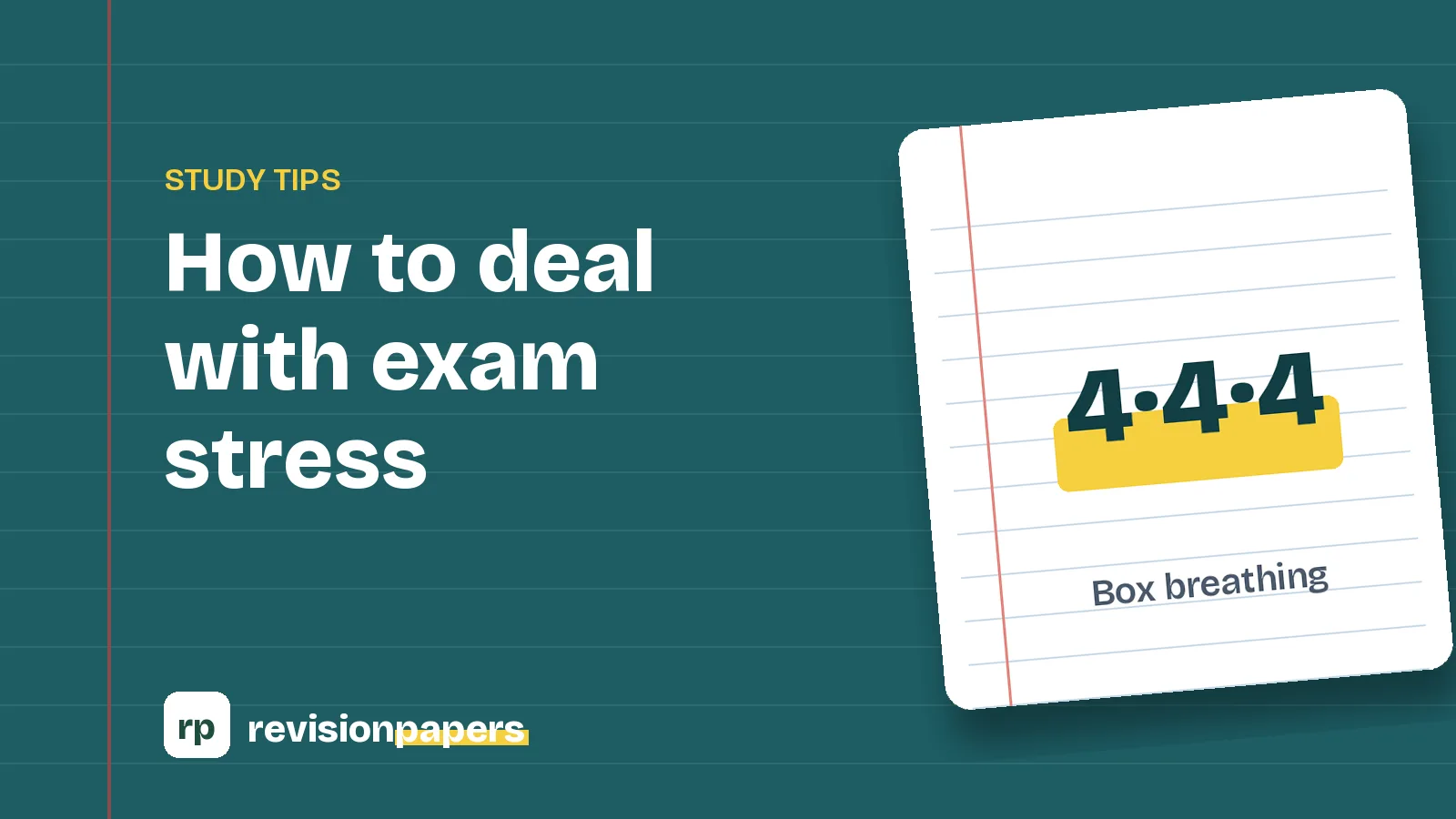
When you feel panic rising, try box breathing:
- Breathe in slowly through your nose for 4 counts.
- Hold for 4 counts.
- Breathe out slowly through your mouth for 4 counts.
- Hold for 4 counts.
Repeat four times. It slows your heart rate and calms your mind, and you can do it quietly in the exam room.
On the day of the exam
- Prepare the night before: pens, mathematical set, index number, and anything else allowed.
- Eat breakfast, even something small.
- Arrive early, but avoid last-minute group panic outside the exam room.
- Read the instructions and all the questions first. Start with a question you can answer well; it builds confidence.
If you go blank in the exam
It happens to many students. Don't panic:
- Stop and breathe (use the exercise above).
- Move to another question and come back later. Memory often returns once you relax.
- Write down anything related to the question: key words, a diagram, a formula. This often unlocks the rest.
After each paper
Do not spend hours discussing answers with friends. You cannot change that paper, and it only adds worry about the next one. Rest a little, then prepare for the next subject.
For parents and guardians
Your support matters more than you may think. Encourage effort rather than demanding particular grades, make sure your child eats and sleeps, and avoid comparisons with other children. See how parents can support exam candidates.
When to ask for help
Talk to a teacher, school counsellor, parent, religious leader or a trusted adult if:
- you can't sleep or eat for several days;
- you feel hopeless or constantly overwhelmed;
- stress is stopping you from studying at all.
Asking for help is a sign of strength, not weakness. If you ever feel unsafe or think about harming yourself, tell an adult you trust immediately, or contact a health worker.